Staring at a stack of bills, feeling like you’re drowning in debt, and wondering if you’ll ever sleep soundly again? You’re not alone. Millions of people feel trapped in the cycle of credit card payments, student loans, and personal debt—but the truth is, you can break free. And you don’t need to become a financial genius or live on rice and beans to do it.
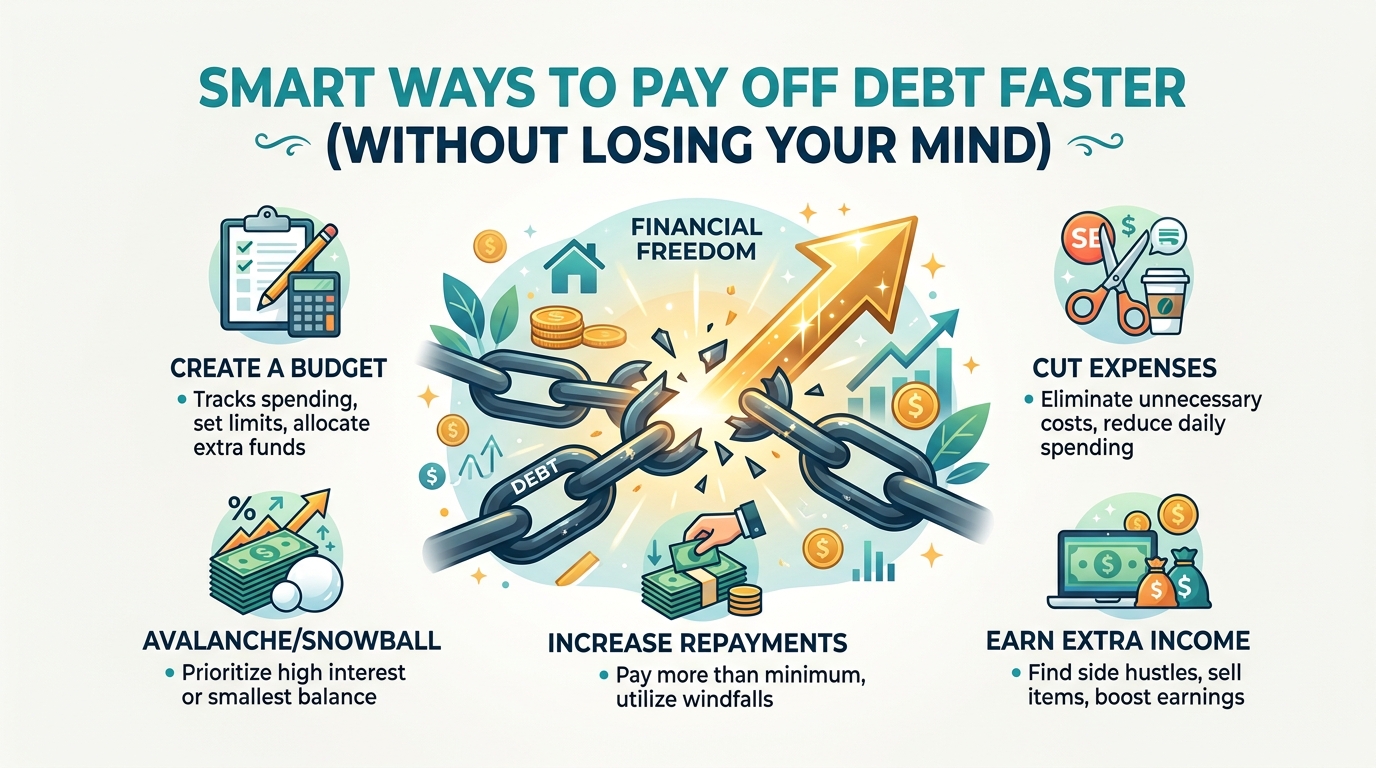
In this guide, I’ll walk you through smart ways to pay off debt faster without sacrificing your mental health. We’ll cover proven strategies, budgeting tips, mindset shifts, and real-life examples that show it’s possible to crush debt while still enjoying life. Whether you have $5,000 or $50,000 in debt, you’ll find a path that fits your situation.
Contents
- 1 Why Paying Off Debt Feels So Hard
- 2 Common Debt Traps:
- 3 Smart Strategy #1: Choose the Right Debt Payoff Method
- 4 Top 3 Debt Payoff Methods:
- 5 1. Debt Avalanche Method (Best for Saving Money)
- 6 2. Debt Snowball Method (Best for Motivation)
- 7 3. Debt Consolidation (Best for Simplicity)
- 8 Smart Strategy #2: Create a Realistic Budget That Works
- 9 The 50/30/20 Budget (Simplified):
- 10 Budget Tips That Stick:
- 11 Smart Strategy #3: Cut Costs Without Feeling Broke
- 12 Where to Cut (Without Losing Your Mind):
- 13 Quick Wins:
- 14 Smart Strategy #4: Increase Income (Even a Little)
- 15 Easy Ways to Boost Income:
- 16 Smart Strategy #5: Negotiate Lower Interest Rates
- 17 How to Negotiate:
- 18 Smart Strategy #6: Build a Tiny Emergency Fund First
- 19 The $1,000 Rule:
- 20 Smart Strategy #7: Use Apps to Stay Motivated
- 21 Top Debt Apps:
- 22 Smart Strategy #8: Get Support (You Don’t Have to Do It Alone)
- 23 Ways to Get Support:
- 24 Smart Strategy #9: Celebrate Small Wins
- 25 How to Celebrate (Without Spending):
- 26 Smart Strategy #10: Avoid New Debt While Paying Old Debt
- 27 Rules to Prevent New Debt:
- 28 Common Mistakes to Avoid
- 29 Final Thoughts: You Can Do This
Why Paying Off Debt Feels So Hard
Before diving into solutions, let’s address the real problem: paying off debt isn’t just about math. It’s about emotions, habits, and sometimes, life circumstances.
Common Debt Traps:
-
High Interest Rates: Credit cards with 15–30% interest make debt grow faster than you pay
-
Multiple Bills: Juggling 3–5 payments each month feels overwhelming
-
No Clear Plan: You’re paying but not seeing progress
-
Emotional Spending: Stress, loneliness, or boredom leads to more spending
-
Life Shocks: Medical emergencies, job loss, or unexpected costs throw you off track
Real Talk:
My friend had $18,000 in credit card debt. She paid $400/month but felt like she was going backward because interest was eating 60% of her payment. She was stressed, anxious, and ready to quit. But once she changed her strategy, she paid it off in 3 years—and actually had fun along the way.
The key is a smart plan that works for your life, not a rigid system that breaks you.
Smart Strategy #1: Choose the Right Debt Payoff Method
Not all debt strategies work for everyone. Pick the one that fits your personality and goals.
Top 3 Debt Payoff Methods:
1. Debt Avalanche Method (Best for Saving Money)
How It Works:
-
Pay highest-interest debt first
-
Make minimum payments on all others
-
Once the highest is gone, move to the next
Why It’s Smart:
-
Saves the most money on interest
-
Feels productive as high-interest debt disappears
Example:
You’d pay Credit Card A first (24%), then B (18%), then the loan (6%).
Best For: People who want to save the most on interest and are motivated by math.
2. Debt Snowball Method (Best for Motivation)
How It Works:
-
Pay smallest balance first
-
Make minimum payments on all others
-
Once the smallest is gone, move to the next
Why It’s Smart:
-
quick wins build momentum
-
Feels encouraging as debts disappear
-
Helps you stay motivated
Example:
You’d pay Credit Card B first ($1,000), then A ($5,000), then the loan.
Best For: People who need motivation and emotional wins to stay on track.
3. Debt Consolidation (Best for Simplicity)
How It Works:
-
Combine multiple debts into one loan
-
Get a lower interest rate
-
One monthly payment instead of 5+
Why It’s Smart:
-
Reduces interest (often from 20% to 8–10%)
-
Simplifies payments
-
Can shorten payoff time
Options:
-
Personal Loan: $5,000–$50,000, 6–24% interest
-
Balance Transfer Credit Card: 0% intro for 12–18 months (then 15–25%)
-
Home Equity Loan: Lower rates but uses your house as collateral
Best For: People with multiple high-interest debts who want simplicity.
Smart Strategy #2: Create a Realistic Budget That Works
You can’t pay off debt if you don’t know where your money is going. A budget isn’t about restriction—it’s about freedom.
The 50/30/20 Budget (Simplified):
Example:
If you earn $4,000/month:
-
Needs: $2,000 (including debt payments)
-
Wants: $1,200
-
Extra Debt/Savings: $800
Budget Tips That Stick:
-
Track Every Dollar: Use apps like Mint, YNAB, or your bank’s tracker
-
Set Spending Limits: Decide max $300/month for dining, $200 for shopping
-
Automate: Set auto-pay for bills and debt payments
-
Review Weekly: Check your spending every Sunday
-
Allow Fun Money: Give yourself $100–$200/month for guilt-free spending
Personal Anecdote:
I used to budget “strictly” and end up binge-buying online. Then I switched to a flexible budget with fun money. I still paid off $12,000 in debt in 2 years—but I also went to concerts, bought coffee, and didn’t feel broken.
Smart Strategy #3: Cut Costs Without Feeling Broke
You don’t need to eat canned beans forever. Small, smart cuts make a huge difference.
Where to Cut (Without Losing Your Mind):
Quick Wins:
-
Cancel 1–2 subscriptions: Save $30–$60/month
-
Cook at home 3x/week: Save $150–$250/month
-
Buy used instead of new: Save 40–60% on clothes, electronics
-
Use coupon apps: Save 10–20% on groceries
Real Example:
My roommate cut her Netflix, Hulu, and gym membership. She saved $120/month. That’s $1,440/year—enough to pay off a credit card in 6 months.
Smart Strategy #4: Increase Income (Even a Little)
Paying off debt faster isn’t just about cutting costs—it’s about earning more.
Easy Ways to Boost Income:
-
Sell Unused Stuff:
-
Electronics, clothes, furniture on eBay, Poshmark, or Facebook
-
Average: $200–$1,000
-
-
Freelance Part-Time:
-
Writing, design, tutoring, or consulting
-
Earn $500–$2,000/month
-
-
Ride Share or Delivery:
-
Uber, Lyft, DoorDash, Instacart
-
Earn $300–$800/month
-
-
Ask for a Raise:
-
10–20% increase = $500–$1,500/month extra
-
-
Side Hustle:
-
Dog walking, pet sitting, house cleaning
-
Earn $200–$600/month
-
Pro Tip: Put 100% of extra income toward debt. Don’t let it become “fun money.”
Example:
If you earn $500 extra/month from freelancing and put it all toward debt:
-
$5,000 debt paid in 10 months (vs. 20+ months)
-
Save $1,200 in interest
Smart Strategy #5: Negotiate Lower Interest Rates
High interest is the #1 reason debt feels impossible. But you can often lower it.
How to Negotiate:
-
Call Your Credit Card Company:
-
Ask: “Can you lower my interest rate?”
-
Mention: Good payment history, competing offers
-
Result: Often 2–5% reduction
-
-
Apply for a Balance Transfer Card:
-
0% intro for 12–18 months
-
Then 15–25% (but you’ll pay debt during 0% period)
-
-
Get a Personal Loan:
-
6–12% interest vs. 20–30% on credit cards
-
One payment instead of 5+
-
Real Example:
I had $8,000 at 24% interest. I called my card company and asked for a lower rate. They dropped it to 19%. That saved me $400/year in interest.
Smart Strategy #6: Build a Tiny Emergency Fund First
Skipping this step is a common mistake. Without a buffer, one unexpected cost sends you back into debt.
The $1,000 Rule:
-
Save $1,000 in a separate account before paying extra debt
-
Use it only for emergencies (car repair, medical bill, job loss)
-
Once debt is gone, build a full emergency fund (3–6 months)
Why It Works:
-
Prevents you from borrowing more when things go wrong
-
Gives you peace of mind
-
Keeps you on track
Example:
Your car breaks down and costs $800. You use your $1,000 emergency fund instead of a credit card. Debt payoff continues uninterrupted.
Smart Strategy #7: Use Apps to Stay Motivated
Debt payoff is a marathon. Apps help you track progress and stay inspired.
Top Debt Apps:
Pro Tip: Use one app consistently. Don’t jump between 5.
Smart Strategy #8: Get Support (You Don’t Have to Do It Alone)
Debt feels isolating—but you don’t have to struggle alone.
Ways to Get Support:
-
Talk to a Friend: Share your goal with someone who’ll encourage you
-
Join a Community: Reddit’s r/financialindependence, r/debtkilling
-
Find a Mentor: Someone who paid off debt and can guide you
-
Hire a Professional: Credit counselor or financial advisor (often free via nonprofits)
Real Talk:
My cousin joined a Facebook group for debt payers. She posted weekly progress, got encouragement, and learned tips from others. She paid off $22,000 in 3 years with their support.
Smart Strategy #9: Celebrate Small Wins
Paying off debt is hard. Celebrating keeps you going.
How to Celebrate (Without Spending):
-
Track Progress: Use a chart or app to see balances drop
-
Reward Yourself: Small treats (movie, coffee, hike) for milestones
-
Visualize Freedom: Imagine your life without debt
-
Share Success: Post about your progress (motivates others too)
Example:
-
Paid off first $1,000: Buy a $15 coffee
-
Paid off $5,000: Go to a concert
-
Paid off $10,000: Take a weekend trip
Key: Keep rewards small and meaningful. Don’t let celebration become a setback.
Smart Strategy #10: Avoid New Debt While Paying Old Debt
The fastest way to fail is to add new debt while paying old debt.
Rules to Prevent New Debt:
-
Stop Using Credit Cards: Switch to debit for 6–12 months
-
Wait 30 Days: Before buying anything non-essential
-
Use Cash for Fun: Give yourself a weekly envelope ($50–$100)
-
Track Spending: Check your budget weekly
-
emergency Fund: Keep $1,000 handy so you don’t borrow
Real Example:
I had $10,000 in debt. I stopped using credit for 1 year, used debit, and built a $1,000 emergency fund. I paid off debt in 2 years without borrowing more.
Common Mistakes to Avoid
Even smart people make these errors. Let’s fix them:
Final Thoughts: You Can Do This
Paying off debt faster doesn’t mean suffering. It means using smart strategies that fit your life:
-
Pick the right method (avalanche, snowball, or consolidation)
-
Create a flexible budget with fun money
-
Cut costs without losing your sanity
-
Boost income with side hustles
-
Negotiate lower interest rates
-
Build a $1,000 emergency fund first
-
Use apps to stay motivated
-
Get support from friends or communities
-
Celebrate small wins
-
Avoid new debt while paying old debt
You’re not alone. Millions have paid off debt and rebuilt their lives. You can too.